
Silicon-Based Utility Droids (SBUD™): Edge-Native Sovereignty
The future of autonomous robotics cannot rely on fragile, cloud-tethered data centers. It requires a resilient, deterministic nervous system.
Neurobotics introduces the Silicon-Based Utility Droid (SBUD). Operating as a specialized hardware configuration of our core SBALF cognitive stack, SBUD is engineered specifically for autonomous, high-reliability operation in extreme conditions. We don't build black-box software; we build true, hardware-enforced determinism.

The Commercial Advantage
SBUD is the deployable, commercial unit of the Renshaw Architecture, designed to integrate seamlessly into Unmanned Autonomous Vehicles (UAVs), Humanoid Robotics, and Industrial Inspection platforms.
By bringing deterministic processing paths to real-world edge devices, SBUD ensures continuous operational readiness where connection failure or decision latency equates to mission failure.

Core Technical Specifications
100% Off-Grid Sovereignty
SBUD operates entirely locally. With zero cloud reliance, your kinetic assets remain fully operational even in completely disconnected or austere environments.
Mathematical Certainty
Utilizing 4K-D or 64K-D Vector Algebra, SBUD maps tactical Rules of Engagement directly to bare-metal. It relies on true physics and rigorous determinism, not probabilistic guessing.
Hardware-Enforced Veto
Safety is hardcoded. SBUD executes natively in a pure RISC-V CPU and FPGA pipeline with Tier 1 physical FPGA loop integration. This provides a nearly instantaneous physical override that is completely immune to software hacking.

Powered by the Neuro-Cognitive Matrix
Zero-Black-Box Control: SBUD bypasses the unpredictable, non-auditable nature of generative LLMs on critical control pathways.
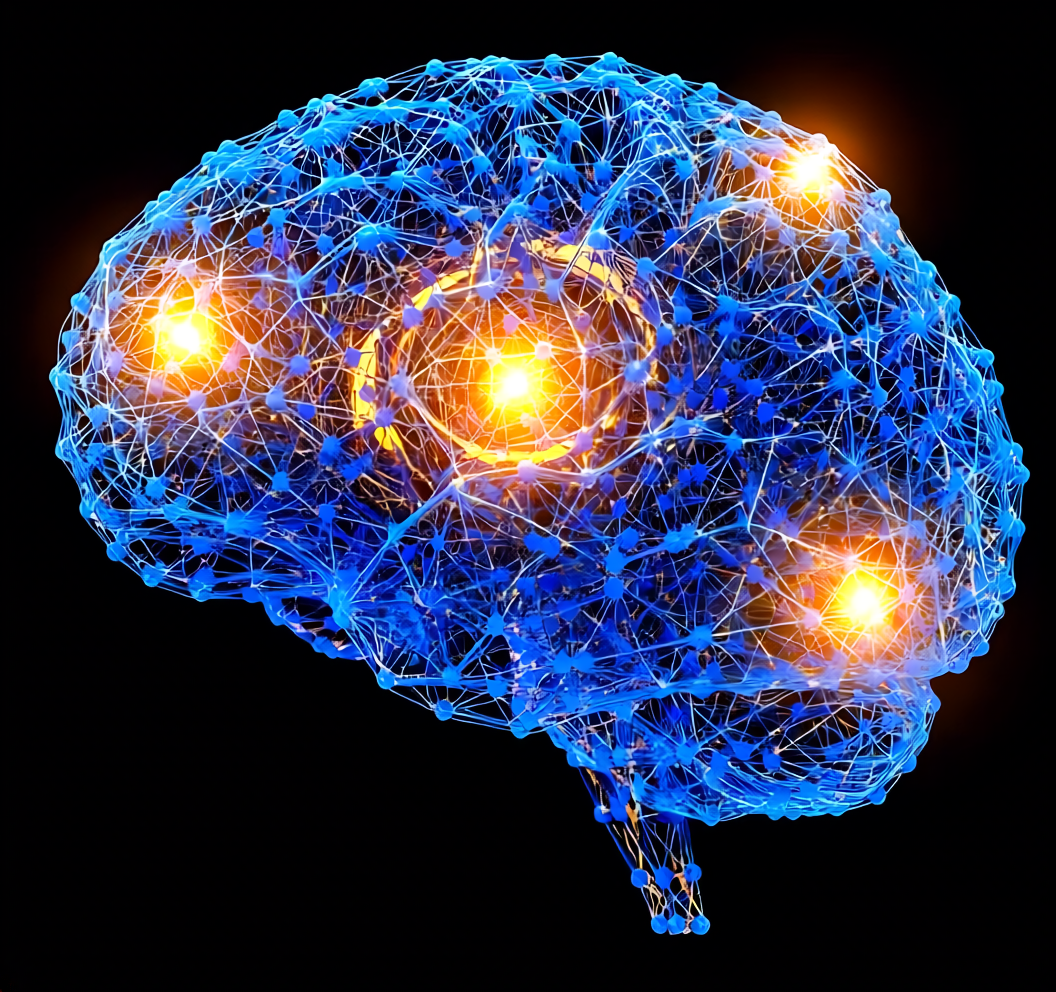
SBUD is driven by our proprietary 7-Tier Neuro-Cognitive Matrix, which maps directly to actual biological nervous systems and Bloom's Taxonomy of Learning. From 275µs spinal reflexes to executive cognitive synthesis at the FPGA level, SBUD provides unprecedented, zero-latency control.

Enterprise Licensing Framework
Neurobotics employs a Dual-Licensing Framework, balancing open science with secure commercial execution. Esse Quam Videri.
Enterprise & Defense (MCLA)
Master Commercial Licenses provide an AGPL-3.0 exemption for proprietary, closed-source integrations requiring strict DISA and STIG compliance.
Hardware Pilots (HEA)
Partner early with us on the physical, bare-metal S-BUD evaluation chassis for off-grid integration testing, chain-of-custody tracking, and federal validation.
Community Tier (AGPL-3.0)
Engineered for academic and Open-Source validation. The core substrate is free to use and modify for non-commercial purposes under strict copyleft protection.